Tuesday, September 12, 2017

Are You For Real? A Tip For Avoiding Con Artists Posing As Psychologists, Therapists and other Mental Health Professionals

Gif from Cruel Intentions

I'm tired of the fakes and the poorly trained. Finding a qualified therapist shouldn't be a gamble, but in too many places, it is.

Most of the information we see online about therapists comes from the EU, North America, Australia, and New Zealand. That's a problem  because it gives a very false impression of the field.

Mental health professionals deal with vulnerable people, but in most of the world, the profession is totally unregulated.

Shocking, right? If you're in Malaysia, Cambodia, Indonesia, or many other countries, you can simply announce, "I'm a psychologist!" and nobody will do a blessed thing to stop you messing about with people who are suicidal, struggling with learning issues, and other serious problems.

There are con artists with no training whatsoever, not even a basic diploma in psychology, running companies that advertise in newspapers, setting up their own endorsement agencies, and even their own training centres. They 'diagnose' you and often charge the earth, too.

There is plenty of discussion about it in the field, but in my opinion, this will be an ongoing issue for some years to come. Even if you fix the problem with a quick bit of legislation, enforcement is difficult - especially as these people will simply rebrand themselves as "clinical therapists" or whatever other title sounds cool to continue their unregulated practice.

Ready for a Safe, Qualified Start—with Me?

I'm Ellen Whyte, and if you're looking for a therapist skilled in anxiety, depression, relationships, abuse, and other common issues, I’m happy to put my credentials up against the high standards I’ve outlined below. After years of international work from Malaysia to my base in England, this means you have a credible resource right here! Oh, and if you want to check me out on social media, have a look at my Facebook page or my LinkedIn profile.

A safe bet is to work with someone like me: I have a basic Bachelor’s degree in psychology as well as a Masters in counselling that includes 300 hours of supervised practical clinical work. 

That way you have someone who's done all the academic work with a healthy dollop of practical work. (I did my supervised training in AWAM, a domestic abuse charity, Dresser-Rand-Siemens, an international engineering firm, and Asia Pacific University.)

Take the Risk-Free Step: message me today via email ellen.whyte@gmail.com or WhatsApp: +44 7514 408143 for your free 15-minute consultation.

So when you need a therapist like me, how do you spot the real deal and avoid the cons?

I had a look yesterday at the social media (Facebook and LinkedIn) of several leading lights in the community and then I compared it to some known crooks.

The legitimate people were posting cartoons of owls, photos of their lunch, moaning about their kids, giggling about silly things that happened to them, sharing jokes—and very occasionally commenting on a psychological issue.

The cons had a steady stream consisting of shares of journal articles, press articles, motivational quotes, and their own evil advertising.

Also, you should know that cons make up fake associations. Yes, it doesn't take much to register an association, and as anyone can be a therapist in many places, nobody cares who's proper and who isn't.

Depressing, right? The cons looked so damn good that if I didn't know better, I'd consult them!

What else can you check to be sure?

Sourcing specialists, say those who work with eating disorders or autism, is best done through your national hospital network and public universities.

When you see a therapist you think you want to work with, ask where they went to college and what their qualifications are. As a first step, make sure that the school exists and that they have the programme your contact says they have completed. (You can call the school but in my experience, they rarely know who's in class this week, never mind who's graduated in the years before.)

The Social Media Spy Test

Then, do a little spying on their social media. One thing that stood out from my looking around is that professionals have connections to universities. They don't necessarily work in them but they'll have friends there.

So, see who their friends are. If you see their pals are from recognisable unis, you're probably okay. Like with me—I've got the uni ties and the hours logged.

You can also ask me directly about your situation. Mental health is a huge field.  I don't work with every issue so if you need something that it's outside my expertise (like addiction counselling), I'll be honest and draw on my worldwide network of trusted professionals to ensure you get a quality referral.

Did you like this? Then you may enjoy this, “If it’s quackery, why is it working for me?”

Monday, August 28, 2017

Should Your Therapist Give You advice?


Freud
Sigmund Freud, Wikipedia
If you’ve never been to see someone about a mental health issue before this may seem a weird question.  However, there are two broad approaches to our kind of work.

In the old days, clients would pitch up, describe what was going on, and receive an expert opinion.  Possibly this came about because many of the first modern generation of mental health providers were psychiatrists, medical doctors specializing in mental health.   
 
So they’d act like traditional doctors, dispensing wise counsel to their patients.

Rogers
But in the 1940s, the idea of a client centered approach became popular. It was championed by Carl Rogers, a psychologist (not a medical doctor!) who believed that we are each our own best expert. He advocated that mental health workers should listen to and work with the client to set goals and find solutions.

Today mental health providers who give advice are called Directive and those who are client centered approach are called Non-Directive.

Generally speaking, people in the West lean towards wanting Non-Directive practitioners because it generally falls in line better with our individualistic, egalitarian cultural approaches while people in South East Asia lean towards wanting Directive practitioners because it falls in line better with their group oriented, strong hierarchical cultural approaches.

I say generally and am making sweeping statements because this is just a casual blog post. If you want to debate this, we can talk about it.  For now the question is, if you are looking for help and a bit uncertain about what you want, what should you know?

Here are some thoughts:

A big pro of the Directive approach is that you don’t have to make any decisions. You pay someone to do it for you. If you get someone good, who thinks like you, that can work very well. 
 
The big drawback is that what works for me, may not work for you. If you are not totally in sync, the advice may not work - or make things worse.

A big pro of the Non-Directive is that you are involved in every stage of the process, and so you are much more likely to develop good approaches that suit your unique person and situation. 
 
The big drawback is that it takes a lot of work, and it can be tiring.

Me, I suggest it’s best to work with someone like me who does a bit of both. You see, there are times when something is clear to me because of my training and experience.

For example, I’m very happy to say things like, “There are three ways of doing this, A, B and C. From what I know of you, I’d go with approach B as it’s most likely to suit you best.”

I’m also not shy about giving opinions. For example, “I think you should consider looking into your relationship with your MIL, because it sounds toxic and I think it may cause you trouble if you don’t address it.”

But I also check with you that this is what you want. And if you disagree, that’s okay. Because I’m someone you work with; I’m not your nanny. In the end, you decide what's good for you.

Sunday, August 20, 2017

When Hate Gets To You, Reach Out (Plus, Tom's Awesome Tuna Shirt!)

Does it seem to you that hate is becoming mainstream?

My brother called me this morning, worried about the terror attacks in Barcelona, Cambrills and Turku over the last few days, coming right on top of Charlottesville, Manchester and London. As he's in Saudi and I'm in Malaysia, we are also aware of the many hate crimes that don't hit main stream news media.

"I don't believe in profiling," he said, "but we have to do something about violent arseholes!"

In case you're confused which particular violent arseholes we were thinking about, the answer is all of them. 

You see, if you take me, my brother and our partners and their sibs and partners, just us very close family, you will see a kind of United Nations effect. 

 We range from Nippon Paint's brilliant white to the finest dark chocolate in terms of skin, and we cover most of the major faith groups. 

We're from Europe, North America and Africa and we live in all those places plus the Middle East and Far East Asia.

In other words: whenever someone blows up "the enemy" or mouths off about "the x problem" you're talking about one of us. It is very hard not to fall into hate. Especially when politicians and faith leaders make speeches about how you are Evil Incarnate.

I can't fix the world but I can help manage my feelings.

What helps me is engaging with people who are cheerfully accepting of differences. The kind who  just respect that we're all different and celebrate it.

When I'm having an anti-X moment, I pick up the phone, and go for a coffee with a friend who isn't like me, and we just hang and have a good time. It can be a Malaysian Christian Mala or a Cambodian Muslim May or a Thai Hindu Myriam - it doesn't matter. Just reminding myself that friendships cross divides cheers me up.
 

Awesome tuna shirt

Good random experiences are a tonic too. Like when me and my friend Emanar were in Central Market a week or two ago, talking to two Malay girls running a clothing stall.

(For non-SEA readers, most Malay people are Muslim. These two definitely were because they wore tudungs, traditional local Muslim headscarves. Although some Muslims drink alcohol, Malaysian Muslims usually believe their religion forbids them to drink and the law prohibits them from buying alcohol. )

"I need a party shirt for my husband," I said to them.

They hauled out a lovely batik, perfect for a posh event.

"I love it," I said. "But I'm thinking more of a party at the pub."

"He can wear this there too," the sisters giggled. "And he'll look so handsome!"

"He's dressed nicely all week at work. Do you have something more relaxed?"

The sisters thought for a second, and then dived into their stock, producing the best beach party shirt I'd seen in years and asking, "Will tuna fish be suitable for the pub?"

"The tuna fish," I said seriously, "will be the talk of the regulars for weeks!"

"Tell them where you bought it!" the girls chorused instantly.  

Such a simple story, right? An everyday occurrence. But when I hear hate speech urging us into "Us & Them" remembering that little scene gives me hope.

Hate isn't universal. And when we reach out and remind ourselves of the ordinary people who are quite happy to accept differences, the world looks a little better.

PS the sisters have the stall on the first floor, on the balcony, directly facing the main door. Their batik shirts are awesome, and they had several more tuna shirts! You should go and take a look.


Saturday, August 12, 2017

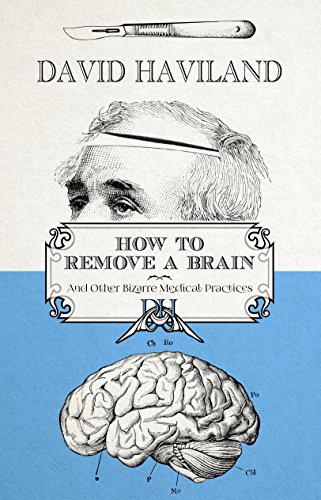
Your Therapist Recommends: "How to Remove a Brain" (And Why I Don't Use Leeches) Review of How to Remove a Brain by David Haviland

How to Remove a Brain: and other bizarre medical practices and procedures
If you're already suspicious of doctors and medical institutions—a common trait among high-achieving professionals and those with a history of trauma (PTSD/cPTSD)—David Haviland’s How to Remove a Brain: and other bizarre medical practices might just send you running for the hills!

This is a wonderfully weird book that drags up every strange, wacky, and sometimes horrifying medical practice from history to the present day. It's written with a pen dipped in sarcasm, and I found myself laughing and groaning in equal measure.

But here’s the serious, therapist-focused reason I loved it:

The Roots of Emotional Disconnection

Reading about doctors who used to avoid speaking to patients directly—preferring to write letters to other doctors instead, simply because seeing "nasty body bits" was beneath them—gave me a lot of food for thought.

I believe this historical "stand-back-and-don't-engage" attitude is the exact thing that has long permeated the mental health profession, making it feel cold, detached, and untrustworthy to many of you.

For Clients with Anxiety: You need a therapist who is present and engaged, not someone operating on old-school, rigid professional distance. This book validates your intuition that distance does not equal competence.

For Trauma Survivors (cPTSD/Abuse): When you have a history of being dismissed or harmed by figures of authority, the last thing you need is a clinical relationship that feels like another power imbalance. Haviland’s book helps shine a light on why medical institutions can feel so deeply dehumanizing.

My Approach is Different

However, I want to be clear: the therapy I provide today has evolved light years beyond this "stand-back" philosophy.

My practice, which specializes in depression, anxiety, and trauma recovery, is built on the opposite philosophy:

We work together. My role is not to stand back and judge, but to be an active, present, and human partner in your healing.

It’s Not a Spectator Sport: Modern, trauma-informed care is about working with your whole self—your thoughts, your body, and your nervous system—not just analyzing you from across the room.

No Bizarre Practices: We use evidence-based, modern, and compassionate techniques to help you feel safe and in control. No brain removal or leeches necessary, guaranteed.

Ready for a therapeutic relationship that is human, direct, and effective? Email me ellen.whyte@gmail.com or WhatsApp: +44 7514 408143  The first 15 minute consultation is free.

P.S. Yes, I do worry this book might fuel some science scepticism, but the truth and the history of why institutions feel untrustworthy are important starting points for healing and change. Huge thanks to NetGalley and the publishers for this insightful read!


Saturday, July 29, 2017

The Invisible Force Driving Your Anxiety: Why We Need to Talk About Shame, with A Review of Shame: A Brief History by Peter Stearns

Shame: A Brief History by Peter Stearns
One of the biggest drivers of silent suffering is shame. It’s the invisible force that tells you, "You are fundamentally bad, and you must hide it."

In my work helping my clients manage PTSD, cPTSD, and high-functioning anxiety, many clients feel trapped by guilt and self-blame. That is precisely why I found Peter Stearns’ brilliant, thought-provoking book, Shame: A Brief History, to be a professional must-read.  

The Book: What Shame is Doing Now

Stearns does a fantastic job of charting how shame is used across societies, from ancient norms to its current, powerful resurgence on social media.

The Internet's New Weapon: Stearns points out that while the rise of individualism lessened the formal use of shame as a tool of control in the West, it has surged back through the anonymity of the internet. This validates what you feel every day: that the fear of public judgment (anxiety) is very real and constantly evolving.

The Cultural Lens: My work in a collective and hierarchical culture like Malaysia often exposes me to traditional uses of shame that can be incredibly damaging. Stearns' historical perspective immediately helped me pull together thoughts on how cultural expectations—past and present—stack the deck against survivors, forcing silence in the face of abuse.

Why This History of Shame is Key to Your Healing

Reading this book is not just an academic exercise; it’s a critical step toward healing because it externalizes your pain. 

It’s Not Your Fault: The book proves that shame is a social tool, not an inherent flaw in your character. If you are a victim of abuse who was blamed or silenced, this work validates your experience by showing that societies often shame the victim to protect the system. Understanding this can be the first, powerful release from the cycle of self-blame that fuels cPTSD and depression. 

Deconstructs Your Internal Critic: For my high-achieving clients (lawyers, managers, doctors), your anxiety is often a fear of professional shaming or failure. Stearns’ work helps you deconstruct where those rules came from and why you carry them so heavily. It gives your logical mind the proof it needs to begin dismantling the power of that toxic internal voice. 

Inspires Change: Just like the shifts Stearns documents in history, we are seeing change today. I see people standing up for victims, even in collective societies. This book is a powerful reminder that the system can be challenged, and your own healing journey is part of that larger, courageous movement.

Shame: A Brief History is a must-read for anyone who feels overwhelmed by self-criticism. It’s a book that truly makes me better at my job. Thanks to NetGalley for the advance review copy.

If you’ve realized your shame is a heavy cultural burden and you’re ready to finally put it down, let’s talk.


Thursday, June 22, 2017

How To Be Happy At Work - When You Don’t Like Your Job

Minions

Some of us are lucky enough to have a career that fascinates us. They may live to work.
 
However, there are many more who work to live. They just exchange labour for money.
 
That’s perfectly fine but it can mean being less than enthusiastic about work. And when the job takes up 8 hours a day, 5 days a week, it can quickly become a miserable experience. 
 
If you aren't happy at work, check out this suggestion for you to be happier at work.

While there are lots of different psychological approaches to working on this problem, one of my favourite go-tos is Self Determination Theory.

What is Self Determination Theory?

Basically, this is a macro theory that suggests motivation relies on us having three things:
  1. Autonomy - having control over your own life.
  2. Competence - developing skills you are proud of and having them recognised
  3. Relatedness - being part of a team, or at least feeling connected to the people around you
Okay, now if Edward Deci and Richard Ryan ever see this over simplified summary of their forty odd years of research, they’d probably have fits. However, this is a simple blog post and it’s good enough for you to get started.

How do I use Self Determination Theory?

Look at your work and analyse your average month.  Then ask yourself questions and use the answers to pump up your happiness potential.

Autonomy
Question 1: At what point in my work do I feel as if I’m Mistress of the Universe? Look for that feeling of control and purpose.
Question 2: What parts of my work mesh with my own beliefs about how life should be?

For example, suppose you work in a customer service centre and feel at the beck and call of faceless others. By asking these questions you might find that your core values include kindness and making a difference. If so, know that each time you help a customer, you are making the world a tiny bit better. If you shift perspective and tell yourself you really are spreading joy, work becomes more joyful.

Competence
Question 1: What do I do that’s fantastic?
Question 2: What do I do okay at that I want to become fantastic at?

Simply put: we love doing things we do well, and we often do well at the things we love. So when you pick a work skill and turn it into your super power, you will get a thrill every time you use that work skill. This pushes up your overall happiness level. Bonus: if you become a true skills ninja, you may be able to get a job you like better!  

Relatedness
Question 1: Do I feel connected to the people around me? And if I don’t how do I make that happen?

For me this is a fundamental part of happiness. People who feel cut off from the world around them fall into despair. There’s no getting away from it: we need to feel connected, even if it’s only to one or two people.

So my advice is, if you can connect to the people you work with in a friendly way, you will feel happier about work. Make friends, and then spread your wings and start connecting with others in your field. LinkedIn is good for that!

If you want more

Like I said, this is a super short blog post that introduces one of the ways you can go about improving your happiness at work.

I’ve made it look like a simple 1-2-3 but clearly there’s a lot more to the theory and what goes into using it in therapy.  This is a conversation starter; it’s not a substitute for proper professional help.

If you are stressed and depressed, and you need help, please do contact me

Sunday, June 4, 2017

Check out my feature in Malaysia Womens Weekly

When you've had a shock diagnosis, your thinking can become a bit wobbly. Check out my feature article, "Why we buy quack medicines when we're ill" and the tips on how to cope when someone you love has a health crisis in this month's Malaysia Womens Weekly 

Ellen Whyte in Womens Weekly

Ellen Whyte in Womens Weekly