Thursday, August 25, 2016

Therapy Isn’t Always Sunshine and Roses: Why Good Counsel Involves Risk

Change is not made without inconvenience, even from worse to better.
Hooker in Johnson's Dictionary of the English Language (1755)

If you’ve never worked with a therapist, you might think it’s a totally positive process that’s all about feeling better. However, therapy isn’t all sunshine and roses. In fact, the very nature of it often includes challenging discussions.

The benefits are huge: 

  • better about yourself, 
  • strengthening coping skills, 
  • improving relationships, 
  • and having a safe place to express emotions

but there’s a catch. Therapy involves risk because it helps you make changes in your life, and all change comes with risk. That’s just the nature of the beast.

Sometimes the risks are obvious. If you seek assertiveness training, you understand your relationships will change. Hopefully, this will be mostly positive, but you accept there may be arguments or resistance. But even seemingly innocuous goals can involve a shock. Here are two examples of the kind of unexpected risks that pop up:

Case Study 1: The Study Technique Shock

John wants to improve his study technique. Together we look into his learning style, energy levels, and how he manages obstacles. Seems harmless, right? However, suppose John strongly prefers to work alone? He may become anxious and stressed when discussing his approach to group work or team projects.

The risk here is simple: he discovers a skill gap that causes him stress, even though he only came in to learn how to highlight better.

Case Study 2: The Screaming Manager

Jane is depressed because she was fired. Her goal is to manage her depression, but while we’re examining what happened, Jane casually mentions that she’s been unpopular in every company she’s ever worked for. As we talk, Jane shares that she often screams at her subordinates.

And this is where the real risk comes in. If Jane was so stressed she didn’t even realize she’d behaved inappropriately, discovering this behavior can be a shock. We might talk more, and Jane might realize she’s doing this in her personal relationships too.

Why the Shock is Always a Good Thing

While I advise people of the risks, I tend to perceive this "risk" as positive because it’s always useful to gain insight. You may learn something new about yourself that surprises or challenges you, but you have the final decision about what to do with that information.

To go back to our examples: John might learn some skills that will help him with group work. He might also decide to avoid jobs requiring teams and opt for a career where he can work independently.

Jane might learn to manage her stress better so that she can build a better career path. Or maybe not! Jane might discover her partner doesn’t mind the odd screaming match, happily yelling back and seeing it as passionate foreplay. The point is, Jane gets to choose.

So in a nutshell, it’s part of good ethics to warn people about the risks involved in therapy. You may have a completely positive experience, or you may learn something new about yourself that surprises or challenges you. Whatever happens, you have the final decision in how you approach it.


Ready to embrace active change and be the best you? Message me today via email ellen.whyte@gmail.com or WhatsApp: +44 7514 408143 for your free 15-minute consultation.


Thursday, August 18, 2016

Boost Your Mood With Pleasant Activity Scheduling

Feeling low, and wondering what on earth you can do to get your groove back?  Check out Pleasant Activity Scheduling, a simple method that injects the fun back into your day.

One of the signs of being depressed is that you lose your sense of enjoyment.  If you love tennis and lunch, depression can make tennis seem a waste of time and lunch seem unappetising.

As a result, you stop playing tennis, stop going for lunch, and before you know it, you’re becoming less active and more isolated.

Whether you choose to take antidepressants,go for therapy or both, one simple activity you can do by yourself is Pleasant Activity Scheduling. As the name suggests, this involves you getting out your diary and adding fun To Dos into your schedule.

Target
Spending time with Target, my cat pal, is always fun
For example:
·        On Monday I have lunch with a friend. 
·        On Tuesday night I play badminton. 
·        On Wednesday night I phone an old school friend. 
·        On Thursday night I eat ice-cream while watching a film.
·        On Friday I pack a lunch and read a novel.
·        On Saturday afternoon I cook lunch for friends.
·        On Sunday I go for a walk in the park.

If it’s part of therapy, I will help you figure out what kind of activities will work best for you and when to time them.  To make the most of this when you're depressed, there are a few variables that have to be considered in each case. 
 
This short post is not the place to describe them but the journal paper behavioral activation treatments of depression: A meta-analysis offers a nice simple overview.

You don’t have to be depressed or in therapy to take advantage of this technique. Just doing this as a stand-alone is a simple, effective practice for self-care.  It can’t harm you, either so it’s perfectly safe.

In fact, I recommend Pleasant Activity Scheduling routinely because so many of us find it hard to achieve a decent work-life balance. With the pressures of work and family, our own happiness often takes a back seat. 

So if you find that most of your schedule involves duties (going to the dentist, picking up dry-cleaning, paying bills) then it’s only sensible to balance those stresses with some self-care.

Finally, if you’re a parent, make it a family exercise. It’s especially useful for kids who are burning out due endless cycles of school, tuition and exams.  
 
If this quick fix doesn't help, first see a medical doctor (click to see how physical and mental health are linked). 
 
If you're all good physically and still not feeling right, message me today via email ellen.whyte@gmail.com or WhatsApp: +44 7514 408143 for your free 15-minute consultation.
 

Wednesday, August 10, 2016

Hi, I'm Ellen and I'm An Atheist. Why I Tell My Clients I’m an Atheist (And Why You Should Care About Your Therapist’s Values

This article was originally written back in 2016 when I was based in Malaysia. Since then, I’ve relocated again, and I’m now working from the UK, providing online therapy to clients across 20+ countries. Despite the geographical change, the core message still stands, and it’s just as important now as it was then.

When I first set up my website, I asked friends for feedback. I was quite surprised that they approved of my spelling, but I was genuinely taken aback by their reaction to this statement on my site:

I am an atheist. Normally that doesn't come up in conversation but if you're looking to talk through questions of infidelity, sexuality, gender, divorce, abortion and other life issues without a religious perspective, you may find that information useful.

"Don't say you're an atheist," several friends chorused. "You'll put people off!"

That was surprising because I was hoping that particular bit of disclosure would encourage trust. While atheism is unusual in South East Asia—and in some countries, atheists are actively targeted—where I come from, the Netherlands and Scotland, it's pretty normal.

Therapy Is Not Value-Neutral

It's common for mental health practitioners to describe their therapeutic approach (CBT, psychodynamic, etc.), but for me, describing personal values is just as important. Therapists are human, and they can have strong beliefs about marriage, sexuality, abortion, and other life issues.

Proportion of atheists and agnostics around the world
Proportion of atheists and agnostics around the world (Credit: Wikipedia)

As a result, we have two extremes: practitioners who try to completely divorce their practice from their own ideals on one end, and faith-based counselling on the other.

If you are seeking therapy, you might think twice about reaching out to someone whose personal values would clash with yours, especially if you are dealing with:

  • Complex feelings about an abortion.
  • Difficulties in an LGBTQ relationship.
  • The pain or confusion of losing your faith.
  • Your husband taking on a second wife who is a horror.

So, I say I'm an atheist because I want potential clients to understand where I'm coming from.

Your Beliefs Are What Count

As far as I'm concerned, being an atheist isn't that important to the work itself. Although I don't have a faith, I've lived in five countries, I've met a lot of people, and I work with Christians, Muslims, Buddhists, Sikhs, and Hindus.

You see, when it comes to therapy, it's not my beliefs that count. If you come to me and tell me your marriage is in trouble, but your religion forbids divorce, that's just another parameter we work with. My opinion about marriage or divorce doesn't come into the picture at all. What matters are your beliefs.

I'm not saying I can work with anyone. When the gap is too wide, and it becomes too difficult to truly understand each other, then the prospect for healthy change is too narrow.

That's why I offer a free fifteen-minute chat to all new clients, just to see if we click. If we don't, we're just out of a little time, and you can look for a better match.

So, if you're looking for a therapist without a religious perspective, message me today via email ellen.whyte@gmail.com or WhatsApp: +44 7514 408143 for your free 15-minute consultation.

Friday, August 5, 2016

Is Psychology A Science?

In a college or university, you’ll probably find the chemistry, biology, and physics departments grouped under the School of Science, but the psychology department is usually stuck in the School of Arts and Social Science. This begs the question: Is psychology not a *real* science?

The answer is complicated, and if you love a good flame war, you’re in for a treat. Here are my quick thoughts on the debate, written for a general audience.

What Makes a Science "Hard"?

If you've not picked up a paper or textbook since school, you might remember how you did an experiment in physics or chemistry and then replicated it again and again and again. This is why for many people, "science" involves:

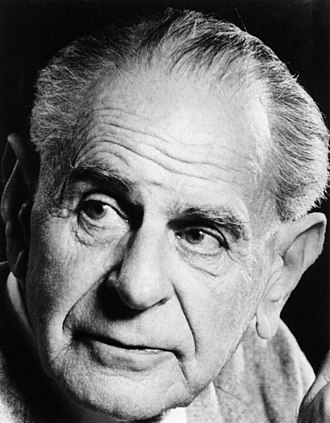
  • Karl Popper
    Karl Popper, serious brain.
    Clearly defined terminology.
  • A falsifiable hypothesis (if you love Karl Popper, and who doesn’t?).
  • A tightly controlled experiment to test the theory.
  • Being able to observe, quantify, and record results accurately.
  • The ability to reproduce the results.

Psychology isn’t like that. There are no universally agreed-upon definitions for depression, happiness, or stress. Even observing them can be tricky.

This is why people often refer to chemistry, biology, and physics as “hard science” and psychology as “soft science.” In such discussions, there’s often a bit of sneering, with the idea that soft science is somehow a bit grubby, a kind of parlor trick.

The Myth of "Hard" Science

However, hard science is in poor supply. If you keep an eye on the news, you’ll see that biologists argue over what kinds of cells qualify as stem cells, chemists argue over how to classify crystals, and physicists are still arguing over quantum mechanics theory 90 years after it was first published, debating whether empirical evidence is even necessary for their ideas at all.

And let’s not talk about how scientific medicine is, or we’d be here all day!

For me, the issue isn’t who has the hardest science. What I’m interested in are investigations into human nature that tell us something about ourselves. 

Psychological research deals with challenging topics that affect us all. Like, why do we rush to help if it’s just us and them, but we’ll maybe stand back if there are fifty of us? And why does a great piece of good fortune coming our way not make us permanently happy?

We have some ideas about why these things happen, but they are controversial—meaning that some studies are hard to replicate. While psychological research isn’t perfect, we’re doing some good work at understanding ourselves.

The Art of Evidence-Based Practice

Ideally, everything we do should be revealing in some universal way. But given the difficulties involved in this field, I think that any kind of insight is useful. If someone can provide information that only applies to a particular group, like Scottish nuns aged 25 to 40, that’s okay. As long as it helps someone, and we're all clear about limitations and caveats, I’m all for it.

We become attached to ideas, even when these are pseudoscience or old ideas proven wrong.  However, part of being a professional therapist is a) keeping up with the science, and b) making sure that clients are not working with theories and practices that have been disproven.

Part b is an art. When you tell someone that one of their favourite theories is disproven or is pseudoscience, they can be upset or even angry. I tell my clients anyway because I believe we need to make informed decisions.

Also, I try to avoid long conversations about why a theory is disproven. I do this because my clients are paying for sessions, not a class in psychology. So typically I say something like, "That is something we used to think but we've moved on from there. Today we think XYZ," and if the client asks, I send them a link to an article.

Clients often ask me, "How can I tell what's current, what's outdated and what's just TikTok blah blah?" and honestly the answer is, "It's not easy!"

I believe that what really matters is critical thinking. When it comes to therapy, you need to have a good grasp of the field, and to be clear, rational, open-minded, and informed by evidence when it comes to practice.

I have seven years of university education, so I'm **Ellen Whyte, BSc Psych (Hons), MCouns (Dist)**, which means I have a Bachelor's with Honours in Psychology and a Master's with Distinction in Counselling.

I have an additional 10 years of work experience, plus I read two or three journal articles a week, and I talk to researchers and colleagues in different areas such as medical doctors, social workers, and community nurses. Sometimes I take courses or attend conferences.

Keeping up to date is part of the job. I am a healer, and as psychology is an evolving science, and healing is always part art, part science, I am always mindful of that fundamental ancient principle: **do no harm**.

If you value clear thinking and evidence-based support, you’re in the right place. I offer private online therapy for professionals who want real insight—not fluff. Message me today via email ellen.whyte@gmail.com or WhatsApp: +44 7514 408143 for your free 15-minute consultation.